Easy read resources | Include.org

Meet Ellie, one of our founding members

“Ellie enjoyed coming to the choir right from the outset. She had learnt Makaton signs when she was a toddler and they had helped her speak. She took to singing with signing straight away,” adds Sue, Ellie’s Mum.

Ellie continues; “one of my favourite memories is when it was my birthday and I was with my Mum at Redhill train station the choir was there to sing Christmas carols for people to hear. They all stopped and sang Happy Birthday to me!”

Sue says; “Ellie enjoys the social side of the choir and being part of a group. She likes to help and become involved. They enjoy performing in many settings but we always enjoy Christmas at the Belfry.”

“I am busy, but I always want to go to Include, says Ellie.

I do Bloomin’ Arts in the day on Wednesdays and then Include Choir in the evening. Tuesdays I do Bloomin’ Arts all day, then Include Champions on Zoom in the evening.”

Choir best bits

“I like the month song – I remind Alix to do the month song at choir. It’s a tradition I like.
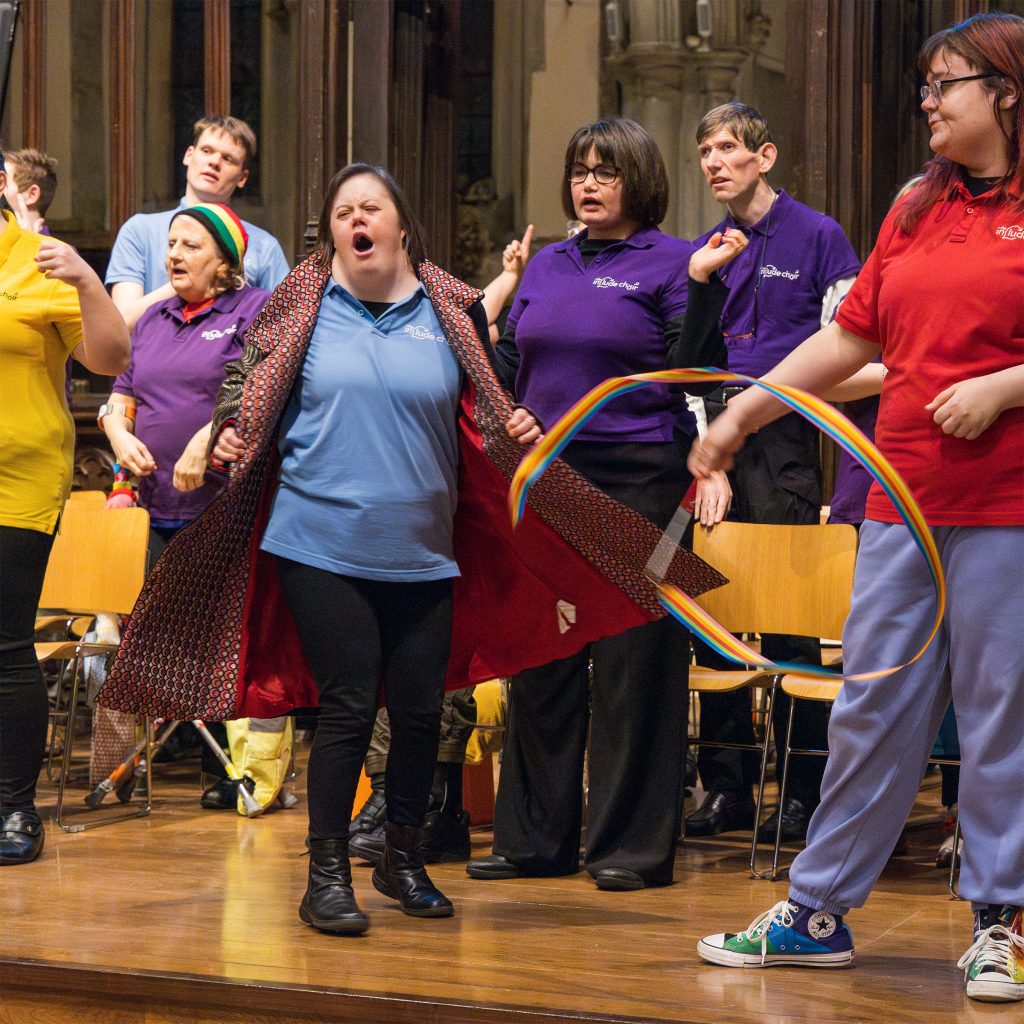
I also like it when we have a choir dress-up theme at rehearsals for something like Halloween.

We used to do a choir newsletter with everyone’s news- I liked that.

One year Alix had song dice – and the sides of the dice had pictures representing different songs on. Like “Make your own kind of music”.

Also, the paperchain song – I like that one and I enjoyed making the giant paperchain in The Belfry shopping Centre. I took my friend and family to see the paperchain in the Belfry.
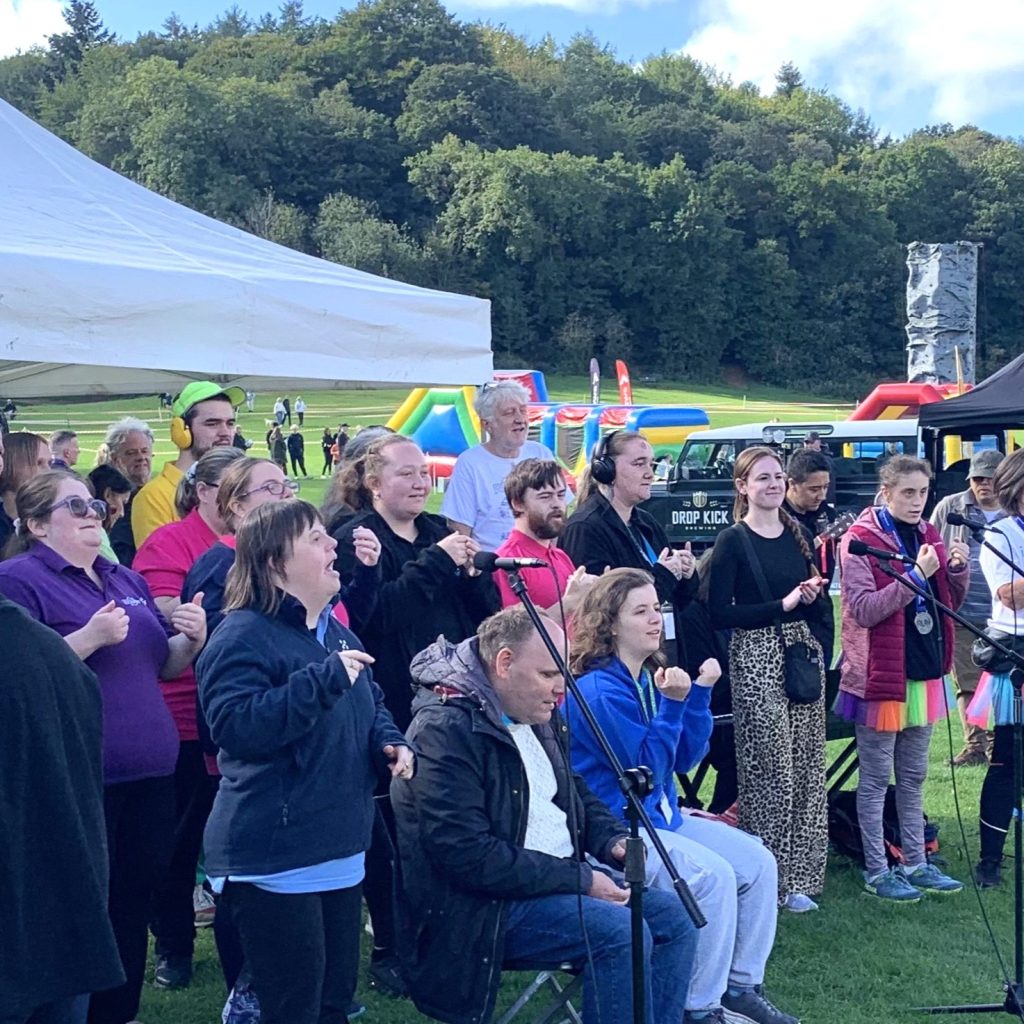
I like performing with the choir. I like Run Reigate – that’s a good one.

I have got loads of memories with Include.”

Sue adds; “Once the Include Choir sang in a concert with two other choirs and I joined the Bletchingley Community choir as a result.”

Never forget

Some choir members can’t come anymore as they have sadly passed away.

“I knew Sai from East Surrey College – we went to college together.
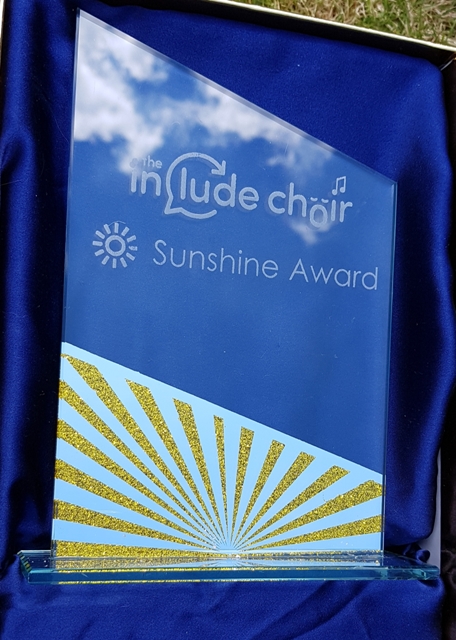
I would sit next to Sai at Choir sometimes. We would talk together sometimes, me and Sai. His parents gave me cuddles, they did, when they came to the choir Big Sing.

One of the ways that we remember Sai is The Sunshine Award in his memory – (an award presented to support staff who join-in and best demonstrate Include’s values), I was proud of the winners of the Sunshine Award for Sai.

Michael passed away too. I used to live with him as well. He asked me out once, and I said yes. Alix put a picture of him on the screen at choir.

It feels like a good thing that Include has had new people join – and seeing people from the Grange at choir as I used to live there.

But I miss Sai and Michael.”

Being a Champion

“I am a Rep for the Include Champions Group .

I like helping people with Champions and I like Easy Reading.

Other information that isn’t Easy Read can be too small – it’s better with big words.

Champions is very good giving ideas how the wider world can be more inclusive.

I like working with people in the Champions group like Philip and Simon. I knew them a bit already from the Mencap committee. I know Josh as well – and we both have nephews. Also, Beth, and there used to be Hannah too.

We do different subjects at Champions – and we have made fun Easy Read stuff too like Halloween and Christmas quizzes, that kind of thing.
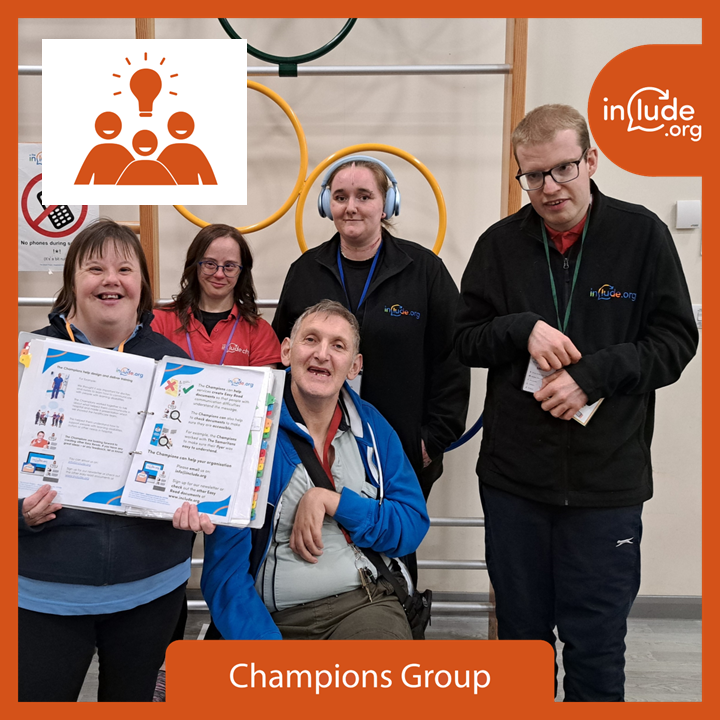
I have a folder with Champions Easy Read information in it at choir.

I like going through the folder and putting things in the right places.

People are able to look at it and sometimes I talk to people at choir about Champions.”

More to be proud of

“I have done so many shows with Bloomin’ Arts – I am the longest member there too.

We are doing Jack and the Beanstalk Panto at the moment. I have also done signing in a play so the audience could see. I did it with Giles (who also goes to Include) on stage too.

I am feeling a bit nervous about doing the G-Live performance coming up because Bloomin’ Arts will be there too and they have never seen me sing with Include before.  It’s a first!

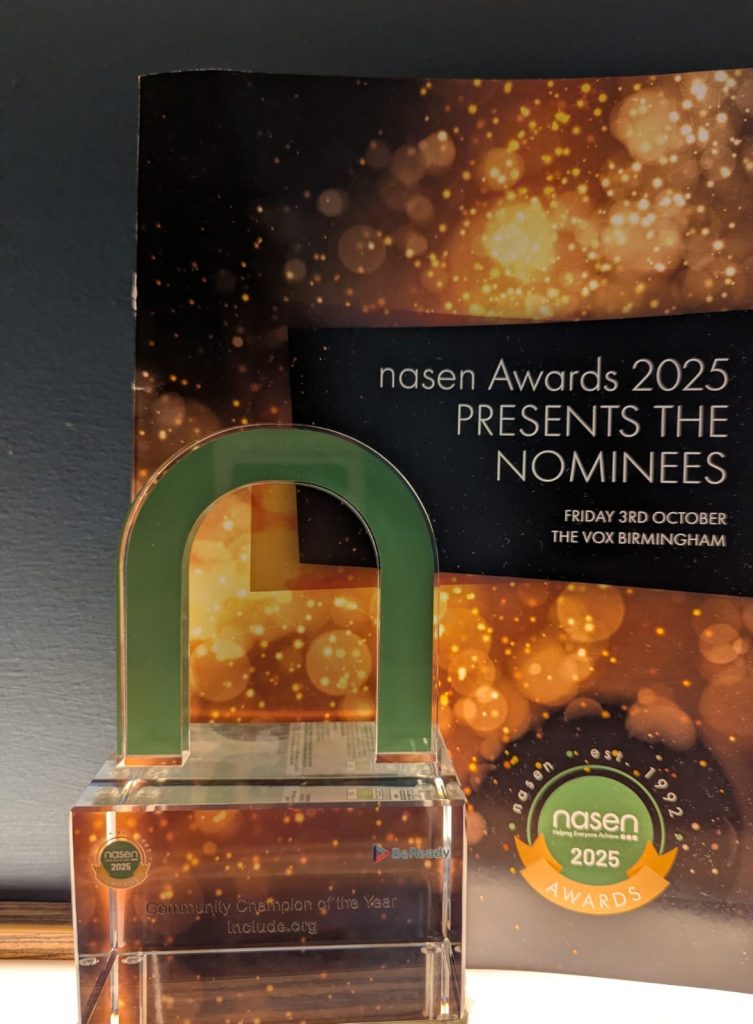
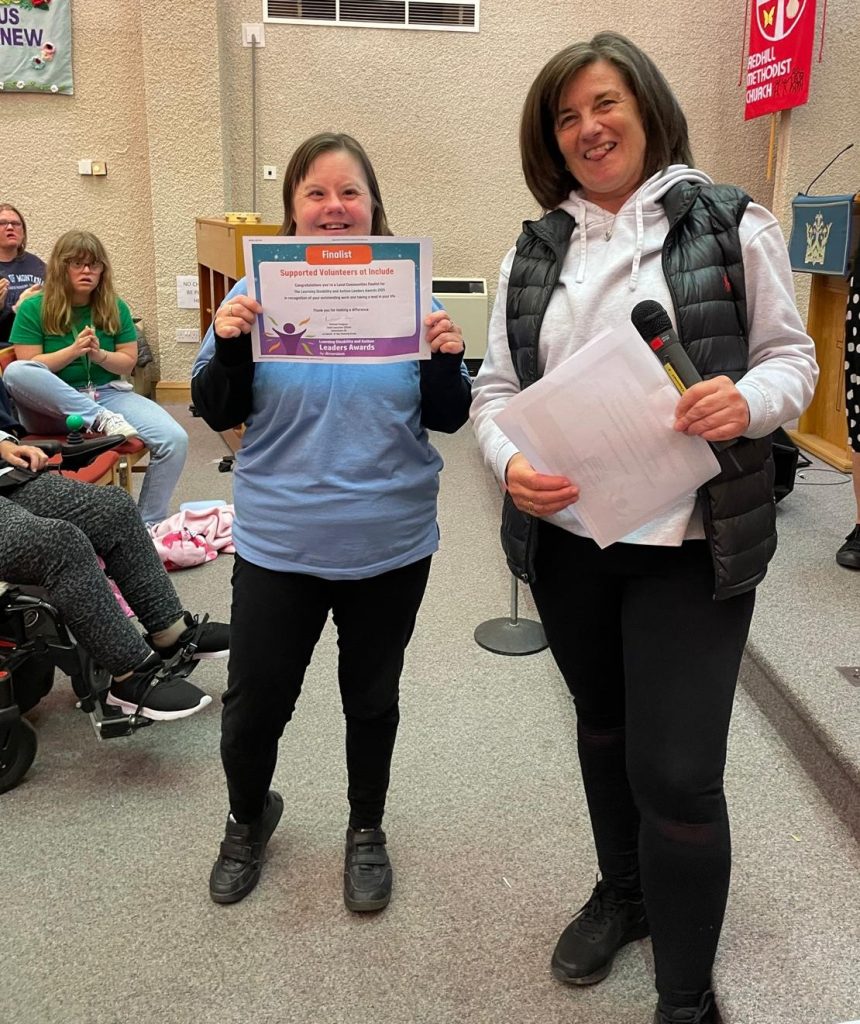
I was proud of Include winning the recent Nasen award that I saw in the emails. And the Champions award. And the Queen’s award for volunteers. And the Learning Disability & Autism awards.”
Looking Forward

“When Include is 10 years old next year – I think we should have a party!

And we need to make sure it’s not difficult for people who can’t see (Include has some members who are visually impaired or blind). We’d need space to have a party. And there would need to be cake!

Champions can help involve the wider community too. I did a speech for Alix’s birthday…I could do a speech for the 10th birthday of Include.

Nigel (our Treasurer) is very good on the money side and will have more ideas for the party.

We could do a “Thank you” song for staff too – something like that.”
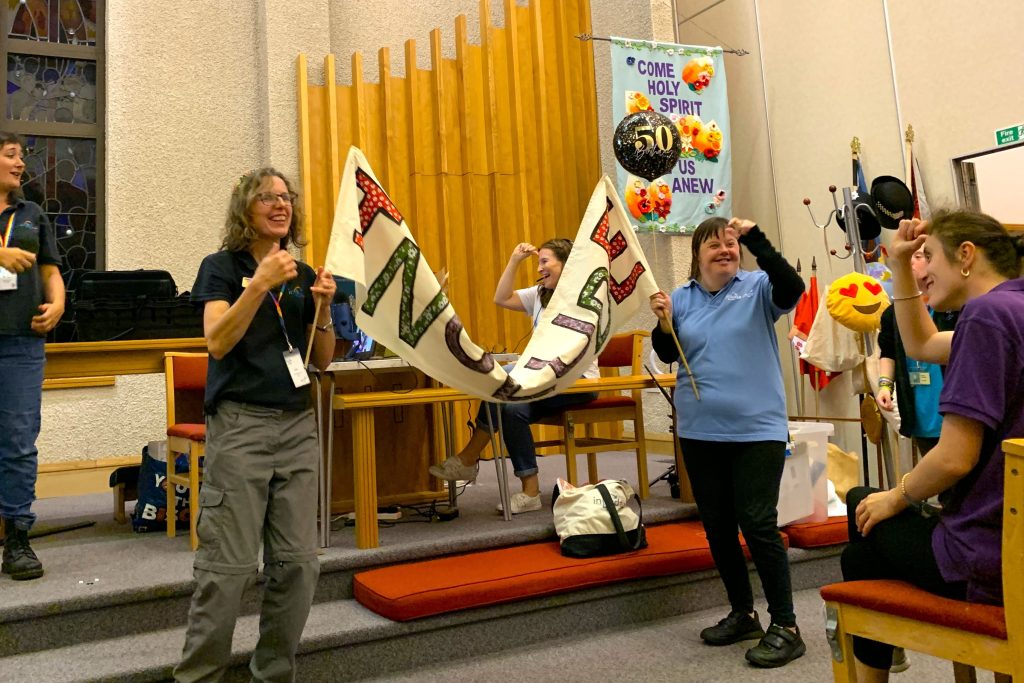
Sue gets in with an early thank you:

Thank you Alix for your vision and hard work. Ellie is very committed to both Include and The Champions, and her confidence and communication skills have benefitted.

Although the venues Include uses have changed, the essence of the choir has stayed the same, although it has grown in size.”

This feedback is something we hope to take into the next decade of Include…some things change, but the essence remains solid and valued.

Penny Sims
Penny Sims
Communications, Fundraising and Partnerships Lead

Stress Awareness Month

Stressful Statistics

April is stress awareness month. Many people take this to mean work-related stress – and that is an issue. 1.8 million working people suffering from a work-related illness, of which 875,000 workers suffer work-related stress, depression or anxiety.

Source: Britain 2022/23 https://www.hse.gov.uk/statistics/overview.htm

Group of professionals including people working in the Social Care sector

The CQC’s state of care report highlights that Social Care Workers are stretched and stressed by lack of resources and high levels of demand.

Meanwhile, among unpaid carers, who are estimated by the UN to meet 75 – 90% of care needs, carer burn out is also real. More than three quarters of all carers (79%) feel stressed or anxious, half (49%) feel depressed, and half (50%) feel lonely.

Source: The State of Caring Survey 2023

Communication skills and stress can be related. Sometimes when stressed, our ability to process or produce spoken language is impaired. And if it isn’t easy to communicate or if we are not understood, it is stressful. All of Include’s projects and training aim to build communication bridges, so that this stress is reduced for everyone involved.

Stroll and Sign project participants smile and wave at the camera

We welcome carers and support workers to our projects and they tell us that things like our Stroll and Sign wellbeing walks help them to feel less isolated and less stressed as a carer.

Being in nature with a supportive group boosts everyone’s mental wellbeing.

You can watch our video about How our Stroll and Sign project helps people. Why not come and join us?

Honest Insights

We asked a friend who is a full-time carer to share his experiences of stress and ways to help manage it. Here is what he said:

“I have always used the word stressed and stress for as long as I can remember, I’ve always felt anxiety socially, About everything really, being late, thinking that I need to be doing something better with my life or thinking that something bad might happen. In December 2020 something really bad did happen, my son had a brain tumour removed and then suffered from severe complications that meant that he needed me to be with him all day every day to care and help him to rehabilitate.

So, I learnt that what I was worried about before paled into insignificance compared to this new life. The stress of keeping someone alive 24/7, the stress of making sure they get the right calories, the right water intake, that they don’t have a seizure, they don’t hurt themselves, to try and get them out into social situations when they don’t want to get out of the car, the dread of impending scans and discussions with Drs to know if the tumour comes back, and a million more tiny stress points in the day while trying to operate as a normal family with my wife and daughter as well.

How do I deal with stress? Well, it is there and it won’t go away and most of the time I can handle it with the occasional ‘dummy spit’ where I have to take a few minutes to breathe. I ensure that I exercise at least 3 times a week, playing Football with a team helps as that is a great place to talk to others who are sometimes going through tough times themselves, but also to talk about Football and tactics that our crumbling bodies probably can’t execute come match day. I also go for a walk around the block on evenings where I need to get my thoughts straight.

My son is currently at a Neuro rehab centre in Surrey with a packed schedule of therapy and School sessions, so I am flat out getting him ready, getting tosessions on time, feeding him etc etc, after our first week we reviewed everything with the team here, and one of the key goals of this placement is for me to look after myself. Easier said than done, but very important because if I suffer then everyone suffers. It’s hard to let go, but I’m doing it step by step, and my son is responding well to me taking a step back at times. I’m also finding it really useful to chat to others who are in a similar situation, there is no agenda, we are all in tough situations and can just talk straight to each other. So, another way to manage stress is to speak to others, understand where you can step-back and that you may not be that vital all the time – the World will still turn without you.

It’s difficult to manage stress. Try to find time away from your day to day to do something you enjoy, chat to people wherever you are, walk round the block, maybe get some professional help if you feel ready, listen to your close ones if they say they are worried about you, there’s always some way to solve a part of the problems you are facing.”

Other things that can help

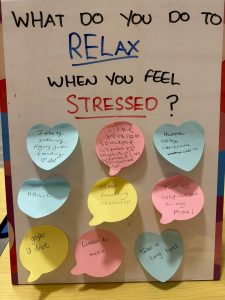
Sticky notes on a board with handwritten comments about how people relax when stressed

We asked some of our Include Choir members, support workers and volunteers to share how they manage their stress. Here are some examples of what they said:

“I relax by gardening, playing guitar and reading.”

“I like to talk to someone, listen to music or watch a film to cheer me up”

“Headspace and yoga. Listen to music. Exercise.”

“Music”

“Turn off notifications on my phone!”

“Listen to music”

“Go for a drive”

“Deep breathing exercises”

“Take a long bath”

Easy Reads

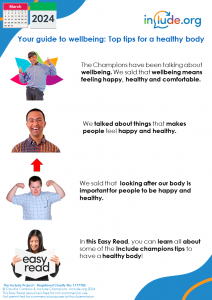
Our Champions Group (people with lived experience of communication needs) has produced two relevant and helpful Easy Read resources – one about mental wellbeing and the other about physical wellbeing.

You can download them for free here:

Healthy Mind download LINK

Healthy Body download LINK

There are audio versions on SoundCloud too:

Healthy Mind

Healthy Body

Penny Sims
Penny Sims
Communications, Fundraising and Partnerships Lead
How has life changed for people with learning disabilities?

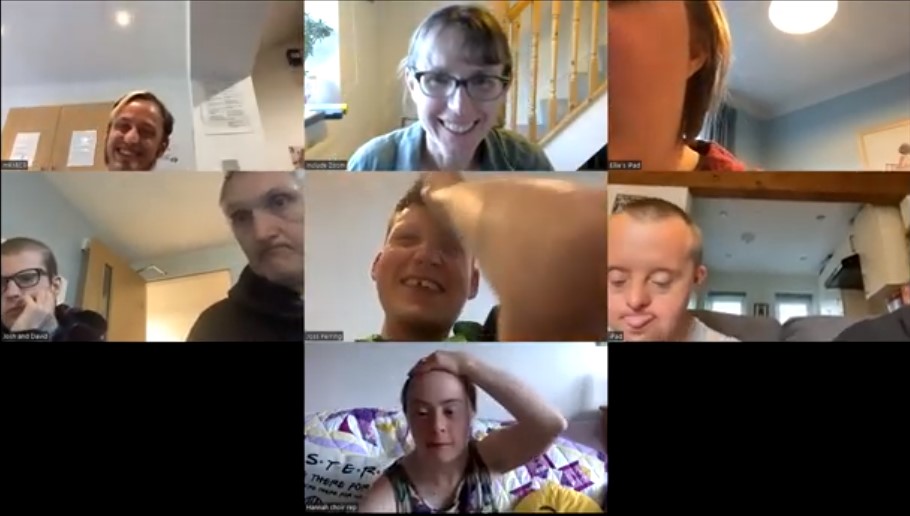
This month, between the Platinum Jubilee and Learning Disability Week 2022, our Champions Group has been reflecting on how life has changed for people with learning disabilities during the Queen’s reign.

We also talked about what was going on for the royal family in each decade, memorable moments like when people walked on the moon – and chose a favourite song from each decade (like Don’t Stop Me Now from the 1970s). So, we hope this Easy Read will inspire you in many ways.

Here is the link to our audio version https://soundcloud.com/user-683393051-385203358/platinum-jubilee-special?utm_source=clipboard&utm_medium=text&utm_campaign=social_sharing

But it might shock you too.

It’s hard to believe that in the 1950s, when Queen Elizabeth II first came to the throne it was common for children with learning disabilities to leave their families to live in ‘long-stay hospitals’ and attending school was not an option.

The Include Champions believe that access to education for all is important. Philip said that it was down to going to school that he has been able to get a job. David said he learned to speak French at college and Hannah cooks her own meals having learned in education. Three great examples.

People Making Change Happen

We celebrated some of the people who really helped to turn the tide and change the way society looks at disability.

Some of the first research into what is actually best for children with Learning Disabilities didn’t happen until 1950s! Joss rightly found this surprising “Are you joking?! That was the first piece of research ever to have been done?!”

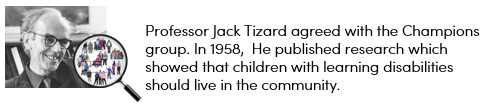
In 1958 Professor Jack Tizard published his findings – the headline – children with Learning Disabilities should not be taken away from their families and would live better lives in the community.  

Then in 1964, the Jean Vanier invited two men with learning disabilities to live in his home rather than in a hospital – the first L’Arche Community home was set up in France. This paved the way for many more people with learning disabilities to return to the heart of their communities. Of Jean Vanier, Joss said “What a great bloke!”

Everyone Can Make A Change

We also talked about how in day-to-day life it’s sadly not just the people who do good things that we remember – we also often remember bad things that people say to us. The Champions Group started talking about how important it is to try to use words that are kind and respectful when talking about people, especially in the context of disability.

All that matters is that we are here and we are thinking about each other and we care.

Hannah summed the conversation up so well… “All people have different abilities anyway. We are all different. It doesn’t matter what we are, it doesn’t have to be perfect or anything, all that matters is that we are here and we are thinking about each other and we care and, plus we need to think about this really carefully.”

And that my friends, is inspiration for a future Easy Read about why words matter.

Penny Sims
Penny Sims
Communications, Fundraising and Partnerships Lead
Sometimes we have cake…but we try to be healthy

When The Include Choir meets virtually or in person we often talk about food!

Last week we voted on whether we thought it was good to have pineapple on pizza – or not.

Quite a controversial topic!

Good nutrition matters

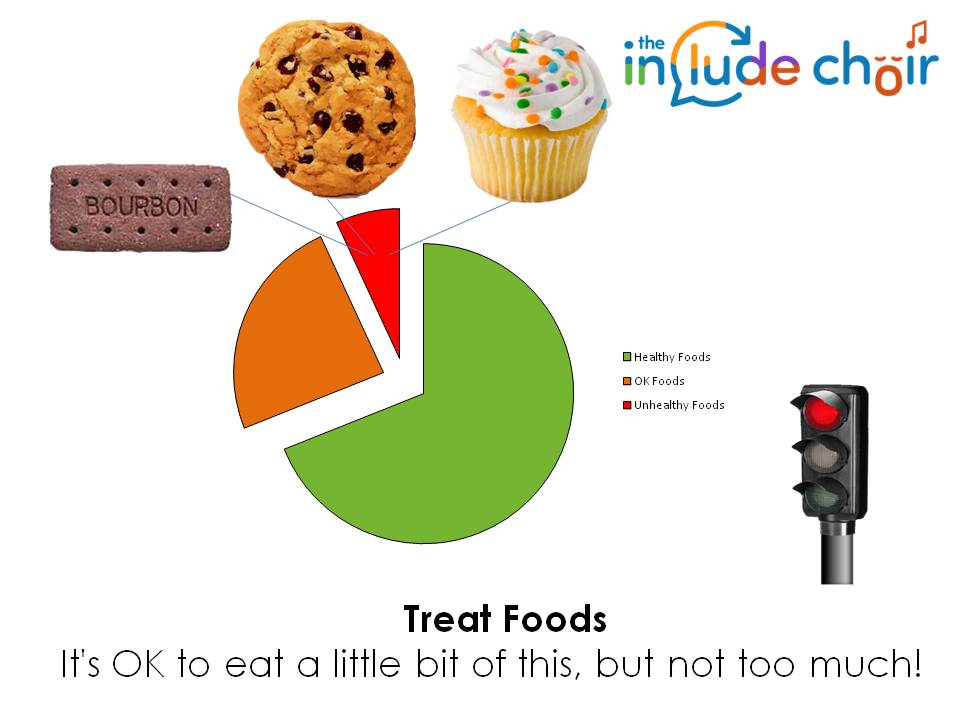
When we can meet up in-person we have snacks available, ranging from the very healthy like carrots and seaweed to treats like biscuits, and we’ll admit it…sometimes we have cake!

We take care to offer a range of food options. While food can be fun, we know that being healthy can be a challenge for people. We also know that sometimes it can become a serious issue for people with learning disabilities or autism.

“Good nutrition is vital to the health and wellbeing of people with learning disabilities, but they are more likely than the general population to be underweight or overweight/obese, in most cases due to lifestyle factors and not to causes inherent to their learning disabilities.”

LeDeR Programme Fact Sheet 28, 2019

Free Resource about being Healthy

During Healthy Eating Week this June we know quite a few of our members have been paying special attention to what they eat. Well done everyone.

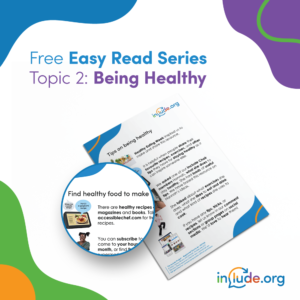
Our Choir Rep Hannah has worked alongside our volunteer Sofia to produce a free Easy Read resource about being healthy. We hope this will be useful to other people too.

We are producing one free Easy Read resource each month for a year as we explained in our blog last month.

A bit about our role model

Hannah is a very active member of The Include Choir.

She works hard to get the balance right between having fun and enjoying food and being healthy.

During lockdown she has been exercising at home and sometimes shows us what she has been baking.

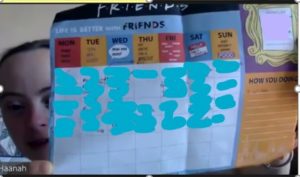
Hannah keeps track of all her activities on a weekly planner.

One way she keeps fit while having fun is doing Bolly X, a fitness class inspired by Bollywood dance.

Hannah works in a supermarket where she can get free recipe cards and she also subscribed to Easy Cook magazine. One of her favourite recent bakes was Cinnamon Bun Muffins – don’t they sound delicious?! Her favourite healthy snack is melon.

Hannah says; “It’s ok to have some unhealthy stuff but not every day. It’s a good idea to look at the back, at the ingredients, to see how much sugar is in it.”

Hannah knows that what she drinks is important too. She likes cranberry juice (cranberry light) and also drinks about 6 cups of water a day.

We hope our free Easy Read resource inspires you to try one of Hannah’s ideas…

Penny Sims
Penny Sims
Communications, Fundraising and Partnerships Lead
Free Easy Read Resources from Include

To celebrate our 5th birthday year as a charity, we’re producing and gifting the world some Easy Read resources!

Our friends over at Photosymbols.com answer the question “What is Easy Read” brilliantly (do take a look).

In short, it means writing and designing information in a way that all people, including people with a learning disability, can understand.

The techniques include using plain English and clear fonts alongside photos or symbols to enhance understanding.

The need for Easy Read information has been highlighted by Covid19. Everyone needs access to clear, easy to understand information about things like lockdown rules and how to stay safe.

By using Easy Read standards for other topics too (not just Covid), we can make many aspects of life more inclusive and accessible to all.

We’ve searched for Easy Read resources ourselves, and in some cases struggled to find any.

For that reason, our volunteers and member/volunteers are working together to produce Easy Read resources on topics that interest us. We hope these will be useful to other people too.

We plan to give away one Easy Read resource each month for a year. Starting this month. Here’s the plan:

June – Healthy Eating resource

July – Listening skills resource

August – Digital Photography resource

September – Recycling / upcycling resource

October – Black Lives Matter resource

November – Kindness resource

December – Christmas Decoration Making resource

January – Mindfulness resource

February – Chinese New Year resource

March – Pancake Making resource 

April – Easter resource

This is the plan, but if you want to suggest a different topic for our series, please let us know. We’re open to ideas!

Penny Sims
Penny Sims
Communications, Fundraising and Partnerships Lead